 1387
/ 8
Min Read
1387
/ 8
Min Read


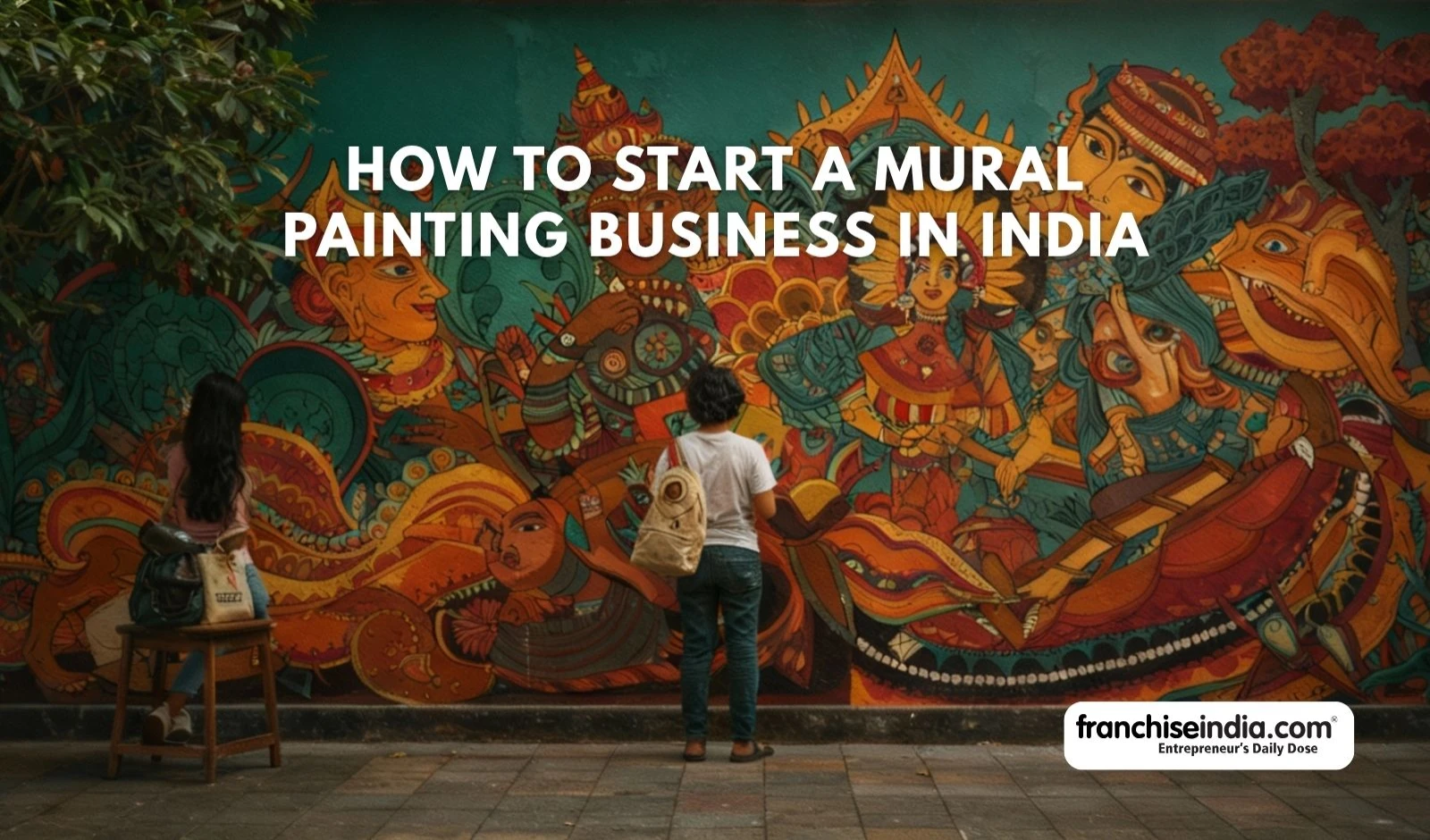
In recent years, murals have transitioned from a genre of painting that is just a creative hobby to being a business opportunity in India. There is increasing demand from cafes and restaurants to offices, hotels, and homes for customized large-scale wall murals. As the interiors of cities look for creativity and customization, mural artists are often seen not only as artists but also as entrepreneurs.
If you are an emerging artist or a creative professional wondering how to turn your talent into a business, this guide will provide you with everything you need to know to start a mural painting business in India, covering both the skill and investment requirements, to marketing and revenue insights.
Also read: How to Start a Salon Business at Home
Understanding the Mural Painting Market in India
In India, the market for mural painting is growing rapidly in many parts due to an increase in urbanization, new boutique hotels, and corporate offices looking for original interiors. Cafes, restaurants, and co-working spaces are also commissioning murals that showcase the organization's brand or that look good for Instagram. Some residential homes are catching on to the trend as well, commissioning walls that include murals depicting nature, abstract concepts, or pop culture. In addition to that, the government is also using mural art to connect with the people.
There are some new or emerging trends, including 3D murals, walls inspired by street art, and digital murals using projectors for brief installations. Mumbai, Delhi, Bengaluru, Pune, and Jaipur have a robust mural culture that creates a solid base of clients for artists.
Target clients include:
- Homeowners: In living rooms, bedrooms, and outdoor walls.
- Businesses: Restaurants, cafes, office walls, and hotel buildings.
- Event organizers: Live painting events for launch parties, festivals, etc.
- Public projects: Local municipalities commissioning murals for beautification.
Skills and Qualifications Needed
.jpg)
Starting a mural business involves much more than artistic ability. Of course, it is important to have a proficiency in drawing, painting, and color theory, but it is just as important to have technical knowledge and business skills.
Artistic Skills:
- The ability to draw, sketch, and use perspective to create visually attractive designs.
- Understanding of color theory and blending techniques.
- Ability to modify styles of art that meet clients' preferences, ranging from abstract to realistic.
Technical Skills:
- Understanding various materials, including acrylics, watercolors, oil paints, spray paints, and primers.
- Understanding wall surfaces, textures, and preparation techniques.
- Knowledge of sealants and protective coatings that ensure the mural's durability.
Optional Formal Training:
- A diploma or degree from an art school such as JJ School of Art (Mumbai) or College of Art (Delhi).
- Online courses that involve mural painting, digital art, or 3D wall design.
Business Skills:
- Project and time management.
- Communication and negotiating with clients.
- Marketing, branding, and networking.
Also read: How to Start a Fashion Accessory Business
Business Model Options
You can run a mural business in different formats:
- Freelance Muralist: Take small residential or commercial jobs as an individual.
- Full-Fledged Mural Studio: Hire a small staff of artists to complete several larger projects.
- Collaborations: Work with interior designers, architects, or decorators to gain more clientele.
- Event Murals: Offer live painting during special events, exhibitions, or festivals for additional income.
- Digital Presence: Sell mural designs online, offer consultations, or have custom mural prints made.
The format that is best for you will be based on your capacity, skillset, and clientele. Many successful muralists start freelancing and then turn it into a studio format over time.
Initial Investment and Costs
Capitalizing on a Mural business will require, at a minimum, some level of investment, mainly in supplies and marketing. Below is a general overview of what you can expect in terms of costs:
Essential Supplies:
- Paint: Acrylics, spray paints, and water-based paints. Estimate between ₹10,000 and ₹25,000 to get started.
- Brushes, rollers, sponges, and palettes: Estimate between ₹5,000 and ₹15,000.
- Protective gear: gloves, masks, aprons, scaffolding, and ladders: Estimate between ₹15,000 and ₹30,000.
- Primer and sealants for wall prep: Estimate between ₹5,000 and ₹10,000.
Workspace:
A small studio or home setup will be sufficient to begin. Renting a small studio space can cost you between ₹10,000 and ₹25,000 a month, depending on where you are located.
Marketing and Portfolio:
- Building and Hosting a Website. Estimate between ₹10,000 and ₹20,000.
- Social media promotions and a photograph of your portfolio of murals. Estimate between ₹5,000 and ₹15,000.
Licenses and Insurance:
- Business License: Proprietorship, Partnership, or Pvt Ltd. Estimate between ₹5,000 and ₹15,000.
- Insurance: Property and liability, optional but recommended. Estimated ₹10,000 annually.
The overall investment in starting your business can be in the range of ₹50,000 to ₹ 2 lakh. This estimate, like any investment, will depend on the scope of your business and geographic location.
Also read: How to Start a Jute Clothing Business in India
Legal Requirements
To operate legally, consider the following:
- Business Registration: If you are a solo artist, you can register as a sole proprietorship. If multiple people are involved, consider a partnership or a Private Limited company.
- GST Registration: If your annual turnover exceeds ₹20 lakh, registration is mandatory. This allows you to issue invoices and claim tax credits.
- Permissions for Public Walls: If you intend to paint a mural on government or municipal property, you will need to get the required permits and approvals.
- Contracts and Agreements: You should outline the scope of the project, timelines, and payment terms with clients. You should also specify revisions, cancellations, and damages.
Marketing and Client Accession
.jpg)
If you want to gain clients and build a brand, marketing is essential. Here are some ways to do it:
Create a Portfolio:
- Take high-quality images of all your completed murals, which you can add to your portfolio.
- Create time-lapse videos of the process of murals because it showcases your creativity and skill.
Utilize Social Media Platforms:
- Instagram, Pinterest, Facebook, and YouTube are all great options for promoting your work visually.
- You should post stories and reels in addition to videos of behind the scenes.
Establish a Network:
- Communicate and build relationships with interior designers, architects, real estate developers, and event managers.
- Participate in exhibitions, art fairs, and community mural projects.
Reviews and referrals:
- Encourage satisfied clients to leave a review or word-of-mouth reference.
- Word-of-mouth can be beneficial in particularly close-knit communities.
Pricing Your Services
Mural project costs depend on the size, the levels of complexity, the material, and the labor. Here are some standard costing methods used in India:
- Per square foot: Residential murals can be priced at ₹300–₹1,500 per sq. ft, while commercial murals can be anywhere between ₹500–₹2,500 per sq. ft.
- Per project: A small wall (6–8 ft may cost around ₹20,000–₹50,000, while larger walls (20–30 ft) can cost over ₹2 lakh.
- Hourly rates: Roughly ₹500–₹1,500, especially for custom projects, or live paint murals.
Other elements that will be taken into consideration, furthering the price quote, can include: wall preparation, if scaffolding or a lift is required, how intricate the designs will be, and if the client gives revisions. Take into account time and material costs when giving the initial quote.
Scaling the Business
Once you establish a client base, you can start to scale your mural business:
- Hire Assistants: You could use junior artists or apprentices to help get a large project done more quickly.
- Host Workshops: You could teach mural painting to someone interested in the skill, either to clients or corporate teams.
- Diversify Services: You could make 3D murals, digital murals, prints of the mural, or merchandise for resale that features your murals.
- Corporate Partnerships: Work with businesses to paint murals periodically in the office or on a brand.
Scaling requires a lot of planning around hiring good talent, while also maintaining quality murals and marketing effectively to get larger clients.
Challenges and Tips
Like every business, mural painting has its own challenges.
Challenges:
- Wall conditions are rough, uneven, or damp, which will result in paint not sticking to the wall.
- Weather can impact outdoor murals: extreme heat, rain, or humidity may require protective coatings.
- High competition with freelance artists and design studios.
- Managing the expectations of the client and the revisions.
Tips for success:
- Regardless of wall conditions, always prep the wall with primers and sealants for durability.
- Use the best paint to avoid fading or peeling.
- Be very clear with your clients on expected time frames, cost, and maintenance.
- Document all work for your portfolio. Photos and videos are your best marketing tool.
- Network with interior designers and local businesses for referrals.
Revenue Potential in India
A mural painting business in India has the potential to earn:
- Small residential murals: ₹20,000–₹50,000 per project.
- Commercial murals: ₹1 lakh–₹5 lakh per project, depending on the size and complexity.
- Live mural events or workshops: ₹5,000–₹25,000 per event.
A single artist can earn ₹1 lakh–₹3 lakh a month with 5–10 projects per month, which can increase with a team of artists or commercial clients.
The goal is to find the right balance between your pricing, quality of work, and marketing. By consistently creating visually appealing work, you are positioning yourself as a sought-after mural artist in your city.
Launching a mural painting business in India combines a passion for creativity with the fundamentals of entrepreneurship. As the world becomes more urbanized, interiors are becoming more personalized and driven by social media, providing a strong demand for mural art across residential, commercial, and public spaces. If you combine your artistic flair with the understanding of your preferred market, pricing, marketing, and scaling your business, you can turn your hobby and passion into a successful business.
You might also like: 11 Profitable Home Supplies Business Ideas